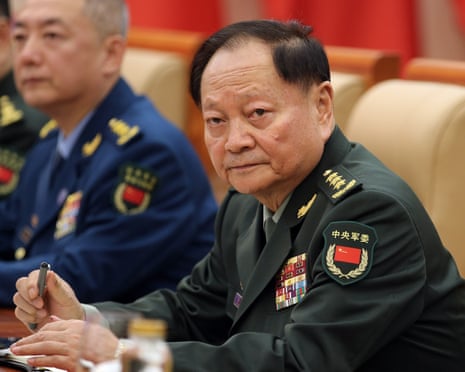
Zhang Youxia is one of the most influential military leaders in the People’s Republic of China, known for his long-standing service in the People’s Liberation Army and his close association with the highest levels of political power. Born in July 1950 in Shaanxi Province, Zhang comes from a family with deep revolutionary roots. His father, Zhang Zongxun, was a senior general in the PLA and a veteran of the Chinese Communist revolution, which placed Zhang Youxia in close proximity to military culture and ideology from an early age. This background shaped his career path and values, encouraging him to join the PLA in 1968 during a turbulent period marked by the Cultural Revolution. His early years in the military were spent gaining frontline experience, which later became an important source of credibility in an institution that values combat exposure.
Combat Experience and Rise Through the Ranks
Unlike many modern Chinese generals, Zhang Youxia has direct combat experience, having participated in the 1979 Sino-Vietnamese War. This experience is often highlighted as a defining feature of his military profile, setting him apart from officers whose careers developed during relatively peaceful decades. Over the years, Zhang steadily rose through the ranks, holding various command and political positions within the PLA. His career progression reflected both operational competence and political reliability, two essential qualities for advancement in China’s military system. He eventually became commander of the Shenyang Military Region, an important strategic area bordering the Korean Peninsula and Russia, further enhancing his reputation as a capable and trusted leader.
Role in Military Modernization
Zhang Youxia has played a significant role in China’s broader effort to modernize and reform its armed forces. As China shifted its military focus toward advanced technology, joint operations, and streamlined command structures, Zhang was involved in overseeing procurement, equipment development, and organizational changes. His appointment as Vice Chairman of the Central Military Commission placed him at the center of defense policy and military decision-making. In this role, he has been associated with strengthening China’s defense industries, promoting the development of modern weapons systems, and improving the PLA’s readiness for complex, information-based warfare. His influence extends beyond traditional ground forces, touching on aerospace, naval, and strategic capabilities.
Political Influence and Relationship with Leadership
One of the most notable aspects of Zhang Youxia’s career is his close relationship with China’s top political leadership, particularly President Xi Jinping. Their families share revolutionary ties, and this long-standing connection has contributed to mutual trust. Within the Chinese political system, such relationships are often crucial, especially in institutions where loyalty to the Communist Party is paramount. Zhang’s position within the Central Military Commission reflects not only his professional qualifications but also his perceived reliability in supporting the Party’s leadership over the military. This trust has made him an important figure in ensuring that the PLA remains firmly under Party control during a period of significant reform and consolidation of power.
Significance in Contemporary China Zhang Youxia
Today, Zhang Youxia is widely regarded as one of the most powerful military figures in China. His career symbolizes the blend of tradition and transformation within the PLA, combining revolutionary heritage, combat experience, and modern strategic thinking. As China continues to assert itself on the global stage, figures like Zhang play a crucial role in shaping military posture and signaling continuity in leadership. His influence is felt not only in military circles but also in broader discussions about China’s security priorities and governance. Through decades of service, Zhang Youxia has become a central figure in understanding how China’s military leadership operates and evolves in the twenty-first century.
Leave a Reply