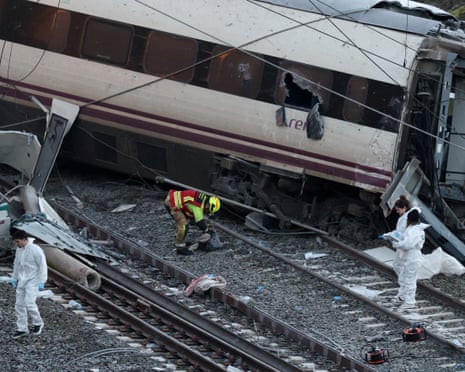
The Spain train crash stands as one of the most heartbreaking transportation disasters in modern Spanish history, not only because of the lives lost but because it exposed how fragile even advanced systems can be when human judgment, technology, and infrastructure fail to align perfectly. Train travel in Spain has long been celebrated for its speed, efficiency, and comfort, especially with the expansion of high-speed rail networks connecting major cities. Yet, in a single devastating moment, public confidence was shaken, and a nation was forced to confront painful questions about safety, responsibility, and the true price of modern mobility.
What Happened: The Day of the Crash
The most widely remembered Spain train crash occurred on July 24, 2013, near Santiago de Compostela in the region of Galicia. A high-speed train traveling from Madrid to Ferrol derailed on a sharp curve just outside the city, causing several carriages to overturn and crash into surrounding structures. The train was reportedly traveling at more than twice the recommended speed for that section of track, turning what should have been a routine journey into a catastrophe. Seventy-nine people lost their lives and more than a hundred were injured, making it one of the deadliest rail accidents in Spain’s recent history. Witnesses described scenes of chaos and horror, with twisted metal, scattered luggage, and passengers desperately trying to escape the wreckage while rescue teams rushed to pull survivors from the debris.
Causes: Human Error and Systemic Gaps
While initial shock focused on the violence of the crash itself, investigations soon turned toward understanding how such a disaster could occur on a modern rail network. The primary cause was identified as excessive speed, with the train entering a dangerous curve far faster than safety standards allowed. However, reducing the tragedy to a single mistake would be too simplistic. The accident revealed deeper systemic problems, including inadequate safety controls, insufficient automated braking systems on that stretch of track, and a heavy reliance on human vigilance rather than technological safeguards. The driver admitted to being distracted and losing track of speed, which highlighted how even experienced professionals are vulnerable when systems fail to provide enough layers of protection.
Impact on Victims and Society
Beyond statistics and technical explanations lies the real heart of the tragedy: the people affected. Families lost loved ones in a matter of seconds, and survivors were left with physical injuries and long-term psychological trauma. For many Spaniards, the crash was not just a news story but a collective wound that reopened fears about travel safety. Vigils were held across the country, and messages of sympathy poured in from around the world, reminding everyone that transportation disasters resonate far beyond national borders. The crash also sparked public debate about whether speed and efficiency had been prioritized over caution and whether authorities had done enough to prevent such an outcome.
Legal and Political Aftermath
In the years following the crash, legal battles and political scrutiny intensified. Investigations examined not only the train driver’s actions but also the responsibilities of railway authorities and government bodies. Critics argued that warnings about the dangerous curve had been ignored and that cost-cutting and design decisions played a role in leaving that section of track without adequate automatic safety systems. Court proceedings stretched over several years, reflecting the complexity of assigning blame in a disaster where human error intersected with institutional shortcomings. The case became a symbol of how difficult it is to balance accountability with the reality of large, interconnected systems.
Lessons Learned and Safety Reforms Spain train crash
Perhaps the most important legacy of the Spain train crash is the set of lessons it forced the railway industry to confront. After the accident, Spain and other European countries reviewed their safety protocols, particularly regarding speed control and automated braking systems. There was a renewed push to ensure that high-risk sections of track are equipped with technologies that can intervene when human judgment falters. Training programs for drivers were also reevaluated, with greater emphasis on situational awareness and fatigue management. While no reform can undo the pain suffered, these changes aim to reduce the likelihood of similar tragedies in the future.
Conclusion: Remembering and Moving Forward
The Spain train crash remains a sobering reminder that progress, no matter how impressive, must always be anchored in safety and humility. As rail networks continue to expand and trains become faster, the need for robust safety systems and responsible decision-making grows even more urgent. Remembering this tragedy is not just about honoring those who lost their lives, but about ensuring that their loss leads to meaningful change. In doing so, Spain and the world can strive to make modern travel not only faster and more efficient, but also truly safe for everyone.
Leave a Reply