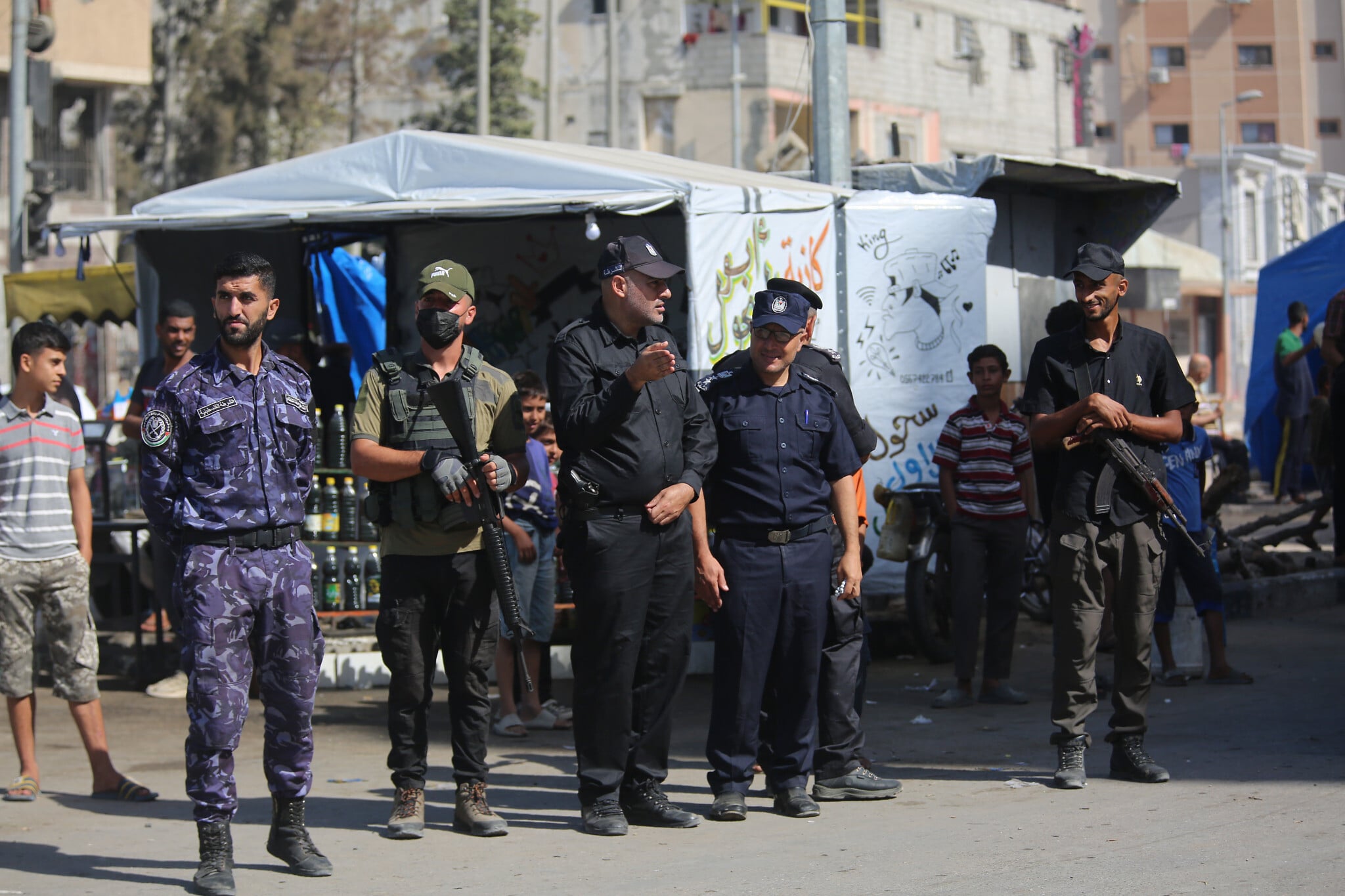
authority of the de facto government. Its creation was rooted in a mix of necessity and politics: Gaza faced widespread insecurity after years of conflict, while Hamas also sought to consolidate governance and legitimacy. Over time, the police became one of the most visible institutions in Gaza, operating checkpoints, directing traffic, investigating crimes, and managing public spaces under conditions shaped by blockade, economic hardship, and recurring violence.
Organizational Structure and Daily Functions
Hamas police are organized under an Interior Ministry that oversees multiple departments, including criminal investigations, traffic control, and public order units. Officers typically wear uniforms and follow procedures similar to conventional police forces, such as patrols, arrests, and court referrals to local judicial bodies. In everyday life, residents encounter the police while resolving disputes, reporting thefts, or navigating licensing and municipal regulations. Supporters argue that the force brought a measure of stability to a densely populated area struggling with poverty and limited resources. Critics, however, note that the police operate within a political system dominated by a single movement, which affects accountability and the separation between civil policing and broader security objectives.
Policing Under Blockade and Conflict
Operating in Gaza presents unique challenges that shape how the Hamas police function. The Israeli-Egyptian blockade restricts movement, equipment, and funding, complicating training and infrastructure development. Periodic armed conflicts damage police stations and disrupt normal operations, forcing officers to balance routine law enforcement with emergency response. During escalations, police activities often shift toward crowd control, civil defense coordination, and maintaining order amid airstrikes and shortages. These conditions blur the lines between civilian policing and security roles, as the force must adapt to an environment where public safety concerns are inseparable from political and military realities.
Relationship with Society and Governance
The relationship between Hamas police and Gaza’s population is complex and varies across communities. Some residents credit the police with reducing certain crimes and providing predictable rules in a difficult setting. Others express fear or resentment, citing harsh enforcement, political bias, or limits on public dissent. The police play a role in enforcing social norms and regulations that reflect Hamas’s ideological outlook, which can affect issues such as public behavior and expression. This intertwining of governance, ideology, and policing has significant implications for civil liberties, especially in the absence of competitive political institutions or independent oversight mechanisms.
Human Rights Concerns and International Scrutiny
Human rights organizations and international observers have repeatedly raised concerns about the conduct of Hamas police, including allegations of arbitrary detention, ill-treatment of detainees, and restrictions on freedom of expression. Because Hamas is designated as an extremist organization by several countries, the police force is often viewed through a security lens rather than as a conventional civilian institution. This designation affects international engagement, aid coordination, and training opportunities, further isolating th Hamas policee force. The lack of transparent accountability structures and independent courts intensifies scrutiny and fuels debate over whether the police primarily serve public safety or political control.
Conclusion
The Hamas police represent a governing institution shaped by conflict, isolation, and contested legitimacy. While they perform many functions associated with civilian policing, their role cannot be separated from the broader political and security context of Gaza. Understanding the force requires acknowledging both the practical need for order in a strained society and the serious concerns surrounding rights, accountability, and politicization. As long as Gaza remains locked in instability and divided governance, the Hamas police will continue to be a central, and controversial, feature of daily life in the territory.
Leave a Reply