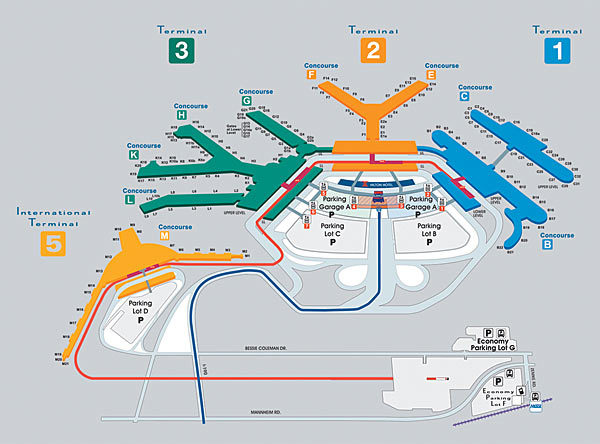
Introduction to O’Hare Gates
Chicago O’Hare International Airport is consistently ranked among the busiest airports in the world, and at the heart of its daily operations are its gates. O’Hare gates are far more than simple boarding points for passengers; they are complex operational spaces where security, logistics, technology, and customer service all intersect. With hundreds of thousands of travelers moving through the airport each day, the efficient management of gates is essential to keeping flights on time and passengers moving smoothly. Understanding how O’Hare’s gates are organized and used helps explain how such a massive airport functions without constant disruption.
Terminal Structure and Gate Distribution
O’Hare Airport is divided into several terminals, each with its own set of gates designed to handle specific airlines and types of flights. Terminal 1 and Terminal 2 mainly serve domestic flights, while Terminal 3 is a hub for major U.S. carriers, and Terminal 5 handles most international arrivals and departures. Each terminal contains concourses, and within those concourses are dozens of gates equipped to handle different aircraft sizes. Some gates are designed for narrow-body planes used on short domestic routes, while others are built to accommodate wide-body aircraft used for long-haul international travel. This distribution allows O’Hare to balance traffic efficiently across terminals, reducing congestion and improving passenger flow.
Gate Technology and Operations
Modern technology plays a major role in how O’Hare gates operate. Each gate is supported by advanced scheduling systems that track arriving and departing flights in real time. These systems allow airport staff and airlines to adjust gate assignments quickly when delays, weather issues, or maintenance problems arise. Electronic displays at gates provide passengers with up-to-date boarding information, while behind the scenes, gate agents coordinate with ground crews, pilots, and air traffic control. The goal is to minimize turnaround time, which is the period between an aircraft’s arrival and its next departure. Faster turnarounds mean fewer delays and more efficient use of limited gate space.
Passenger Experience at the Gates
For travelers, O’Hare gates are where much of the airport experience actually happens. Seating availability, charging stations, nearby restrooms, and food options all influence how comfortable passengers feel while waiting to board. In recent years, O’Hare has invested in improving gate areas by adding more seating, better lighting, and modern amenities such as USB charging ports and improved Wi-Fi access. Clear signage and announcements also help reduce confusion, especially for passengers making tight connections. Since O’Hare is a major connecting hub, many travelers pass through multiple gates in a single trip, making clarity and comfort especially important.
Challenges of Managing O’Hare Gates
Managing gates at O’Hare comes with significant challenges. Weather is one of the biggest factors, as Chicago’s winters can bring snow, ice, and strong winds that disrupt flight schedules. When delays occur, gates can quickly become overcrowded, forcing airport staff to reshuffle assignments on short notice. Another challenge is balancing the needs of different airlines, each with its own schedules and operational priorities. Limited gate availability during peak travel times requires constant coordination and flexibility. Despite these challenges, O’Hare’s gate management system is designed to adapt quickly, helping the airport recover from disruptions as efficiently as possible. O’Hare gates
The Future of O’Hare Gates
O’Hare continues to evolve, and its gates are a major focus of ongoing expansion and modernization projects. New concourses and redesigned gate areas aim to increase capacity, reduce delays, and improve the overall passenger experience. These improvements are expected to support larger aircraft, more international routes, and growing passenger numbers in the coming years. As air travel demand continues to rise, the role of O’Hare gates will become even more critical, serving as the operational backbone of one of the world’s most important airports.
If you want, I can also rewrite this in a simpler tone, more academic style, or SEO-optimized version.
Leave a Reply